
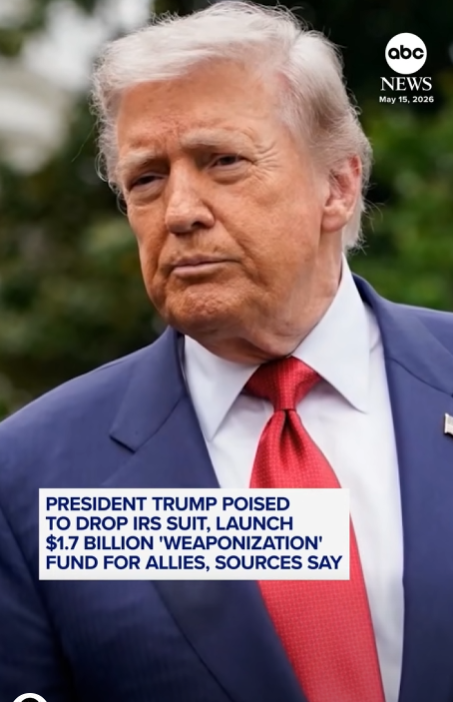
WASHINGTON, D.C. — In a stunning legal and political development that has sent shockwaves through the nation’s capital, sources close to the administration reveal that President Donald Trump is prepared to drop his high-profile $10 billion lawsuit against the Internal Revenue Service (IRS).
However, the potential dismissal comes with a massive, multi-billion-dollar condition. In exchange for withdrawing the legal action, a deal is reportedly being negotiated to establish a $1.7 billion fund dedicated to compensating allies who claim they were wrongfully targeted by the federal tax agency under what the administration calls the “weaponization” of government institutions.
The Origins of the $10 Billion Battle
The initial legal standoff began when Trump filed a massive $10 billion lawsuit against the IRS, alleging systemic bias, political targeting, and the unlawful leaking of confidential tax data. For months, the legal battle threatened to deeply disrupt the internal operations of the Department of the Treasury, with the administration demanding unprecedented transparency and accountability from high-ranking tax officials.
Legal analysts initially viewed the multi-billion-dollar lawsuit as a long-term pressure campaign against the agency. However, the latest reports indicate that the focus has shifted from an outright legal battle in the courts to a massive, structured settlement aimed at direct financial restitution.
The $1.7 Billion Restitution Fund
According to sources speaking on the condition of anonymity, the proposed $1.7 billion fund would be explicitly designated to address cases of alleged political targeting. The funds would provide financial compensation to individuals, political organizations, and business entities associated with the administration who claim they faced unfair audits, delayed approvals, or politically motivated financial scrutiny by the IRS over the past several years.
Supporters of the move argue that the creation of the fund is a necessary step to rectify deep-seated bias within federal agencies and to protect citizens from government overreach. “This isn’t just about a settlement; it’s about establishing a precedent that federal agencies cannot be used as political tools without facing severe financial consequences,” stated a policy analyst familiar with the discussions.
Intense Backroom Negotiations and Backlash
The news of the potential compromise has immediately drawn fierce debate from both sides of the political aisle.
Critics and opposition lawmakers have raised urgent questions regarding the legality and ethics of using federal taxpayer resources to compensate political allies. Legal scholars are already debating whether the creation of such a specific fund sets a dangerous precedent for future administrations looking to shield their associates or bypass standard legal oversight.
“Using a multi-billion dollar government fund to settle a personal lawsuit in a way that directly benefits political allies raises immense constitutional and ethical questions,” argued a prominent constitutional law expert. “This will undoubtedly face heavy scrutiny from congressional watchdogs.”
What Happens Next?
As negotiations continue behind closed doors, a formal announcement regarding the status of the $10 billion lawsuit is expected in the coming days. If finalized, the deal will represent one of the most significant and controversial structural overhauls of federal legal settlements in modern political history.
The Department of Justice and the IRS have both declined to comment on the ongoing discussions, citing pending litigation.
This is a rapidly developing story. Follow our network for exclusive updates, legal analyses, and live reactions from Capitol Hill as more details emerge.
Leave a Reply